
Dispatch #51: Read to Me
Can parents create lifelong readers?

Almost fifteen years ago, when my first child was three or four days old, I read him The Snowy Day by Ezra Jack Keats.
Then, as now, I exclaimed over the collage-style illustrations, Peter’s cap a pop of red in a world of white snow. I marveled at Peter’s pink bathtub as I read, “And he thought and thought and thought about them,” the repetition a song, a pleasure.
My child could not see beyond a few inches in front of him, let alone follow a picture book. His face was still swollen from a tough birth, and I was still bleeding as my uterus contracted back to its original size. Had my milk even come in yet?
No matter. A story was a story and I was reading my child the first of many.
Looking back on it now, I think, Of course I did that. I was sleep deprived and wrecked after a 42-hour labor that ended in a C-section, a birth outcome I’d refused to mentally prepare for. And now I had this human to keep alive? Excuse me?
Reading was how I’d always relaxed and self-regulated. Reading, I felt like myself. That I could share this experience with my baby was the first clue that I’d be able to mother him.
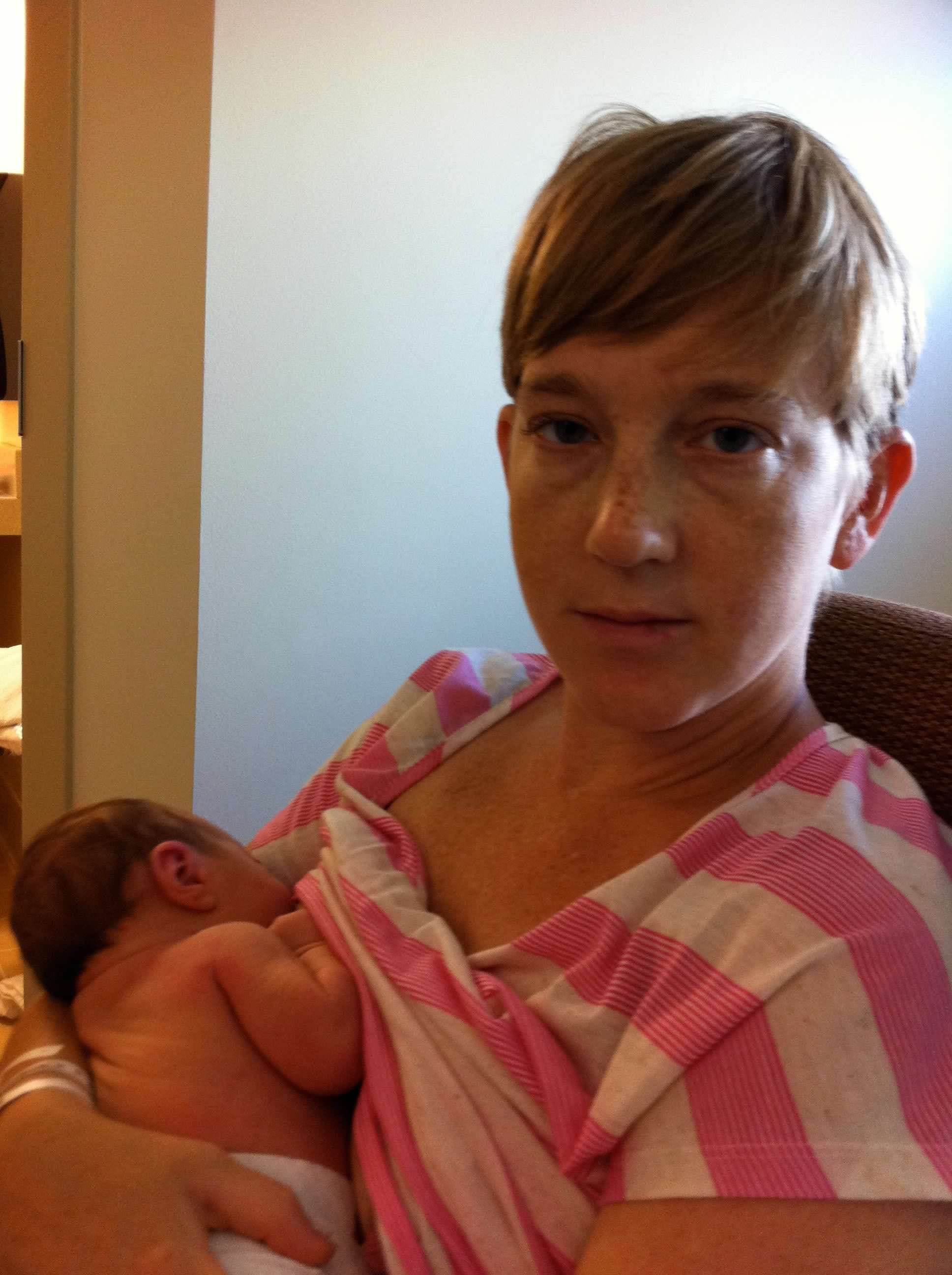
I had two more children, and I read to them as soon as I could. Reading to and with my kids transformed time: ten or twenty or thirty minutes of parenthood became an immeasurable unit of peace and togetherness. The soothing prose rhythm of Margaret Wise Brown’s Big Red Barn is only made more profound with a child’s weight against one’s chest.
In the beginning, it seemed I’d transferred my love of reading to them, that this was a passion my children and I shared. We bonded over favorite books. We laughed over them, we appreciated illustrations, we quoted lines, we asked questions we couldn’t answer. With reading, we punctuated the day.
They got it.
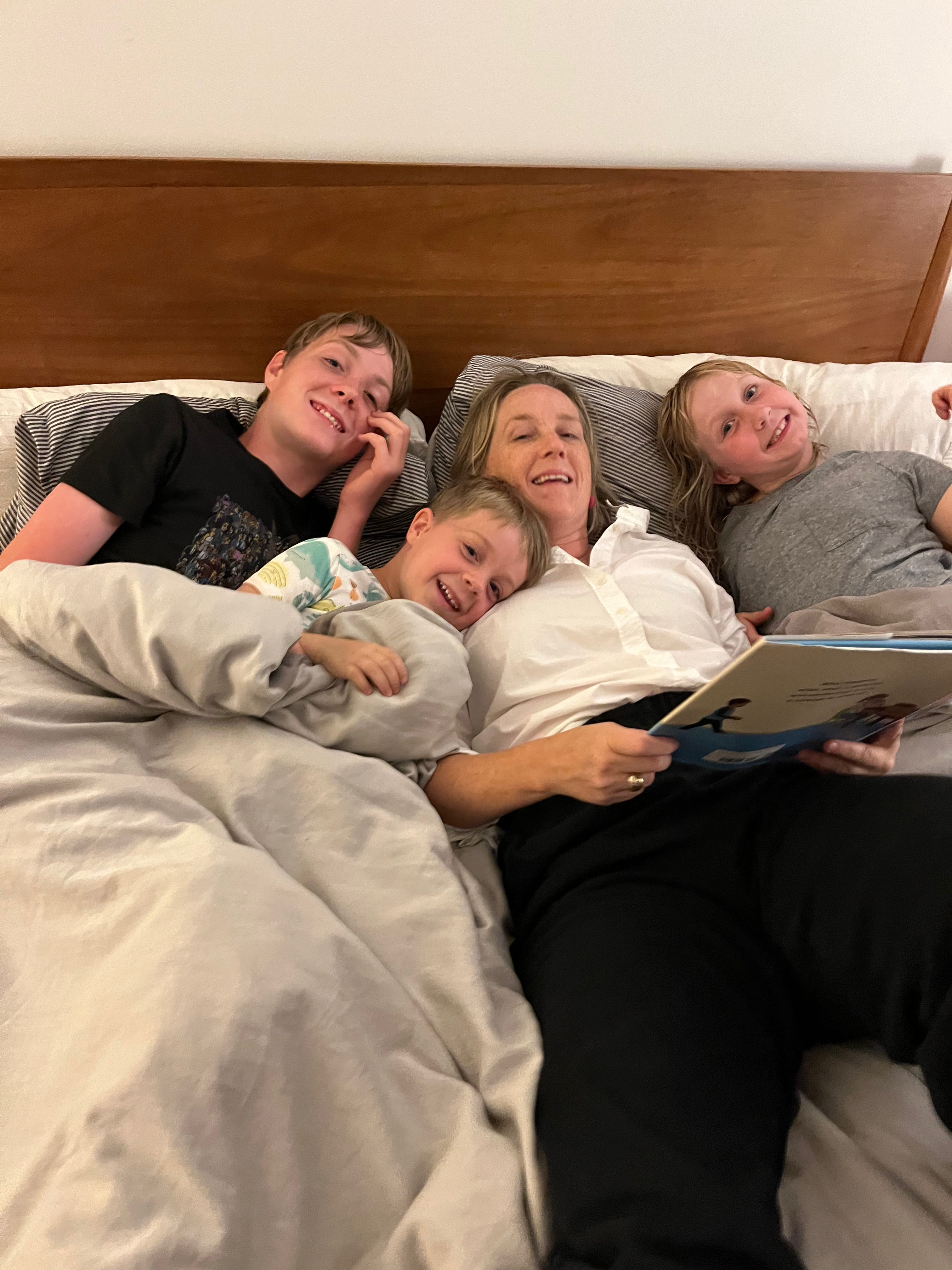
I was eager to teach my kids to read by themselves. How could I not want to pass on this magical power? Also: If they read, they would be more independent. They might leave me alone to dive into a novel. Bliss!
So, one by one, I taught each of them their letters. Then we practiced reading with BOB books. I cheered when they read aloud their first picture books.
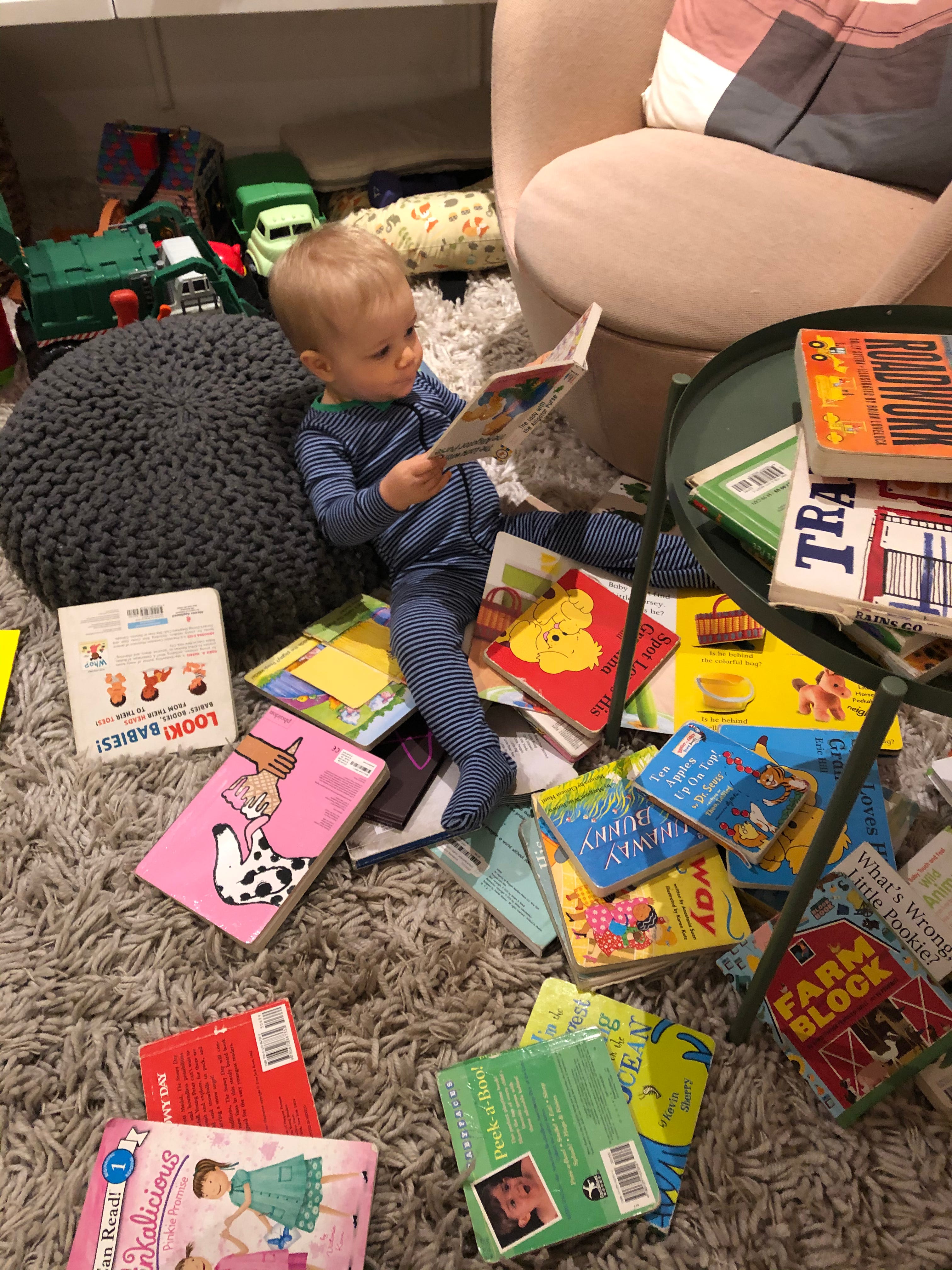
Now my kids are fourteen, ten, and six. We visit the library and our local bookstores on a regular basis, and our house is covered in books. As far as children’s literature goes, we have all the classics and modern greats, plus the hipster titles, the award winners. We also own every shitty Pinkalicious paperback and handfuls upon handfuls of TV tie-ins. All the popular graphic novels too. If you want to read it, I’ll find a way to get it in your hands. Just read!
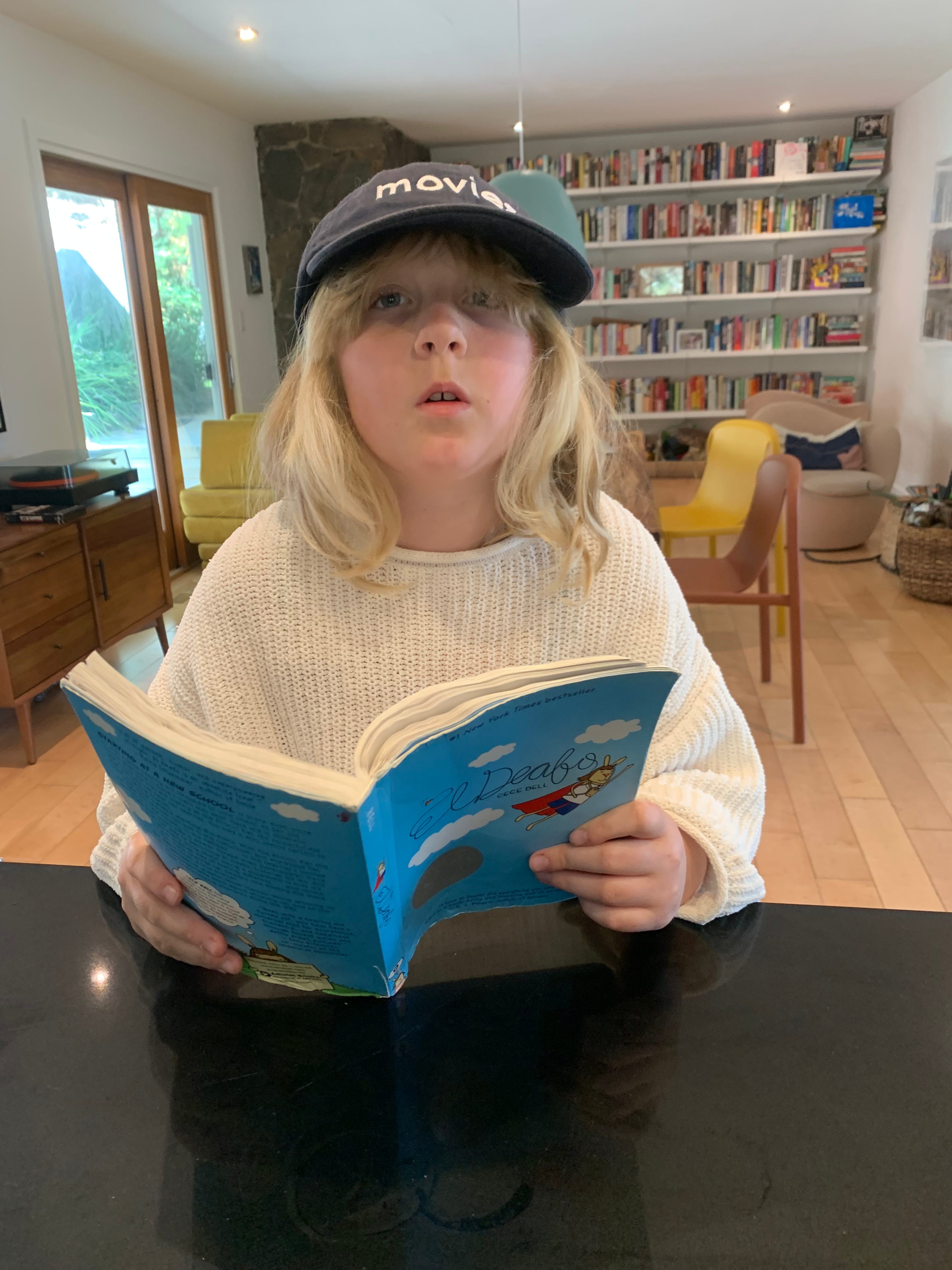
The truth is, there are very (very) few things about parenting that make me think, Yep, nailed it.
For a time, reading was one them.
Until it wasn’t.
Somewhere along the line our house of voracious readers shifted to a house where the parents read…and (most of) the children do because…their parents require it.
Maybe that’s not totally accurate. My kids do read, and not always because we make them.
Mickey has re-read the Dog Man and Dory Fantasmagory series at least 600 times, and he’s currently smitten with Bird and Squirrel, a graphic novel/comic book series that his older brother also loved in first grade. We recently went through a pile of Berenstain Bears picture books together. Now he’s onto a graphic novel series called Mayor Good Boy, which is like Dogman without the copaganda.
Ginger will read any Babysitters Club-related content, especially if it’s a graphic novel. She had a three-month, on-and-off again relationship with a middle grade novel called Gracefully Grayson that she finally finished, declaring it, “My new favorite book.” Last year, she went through a serious Judy Blume phase. We’re slowly reading Anne of Green Gables aloud together.
And, back when freshman year began, Bean read Salem’s Lot obsessively. From time to time, he’ll say, randomly, “I love that book. How did he do it?”
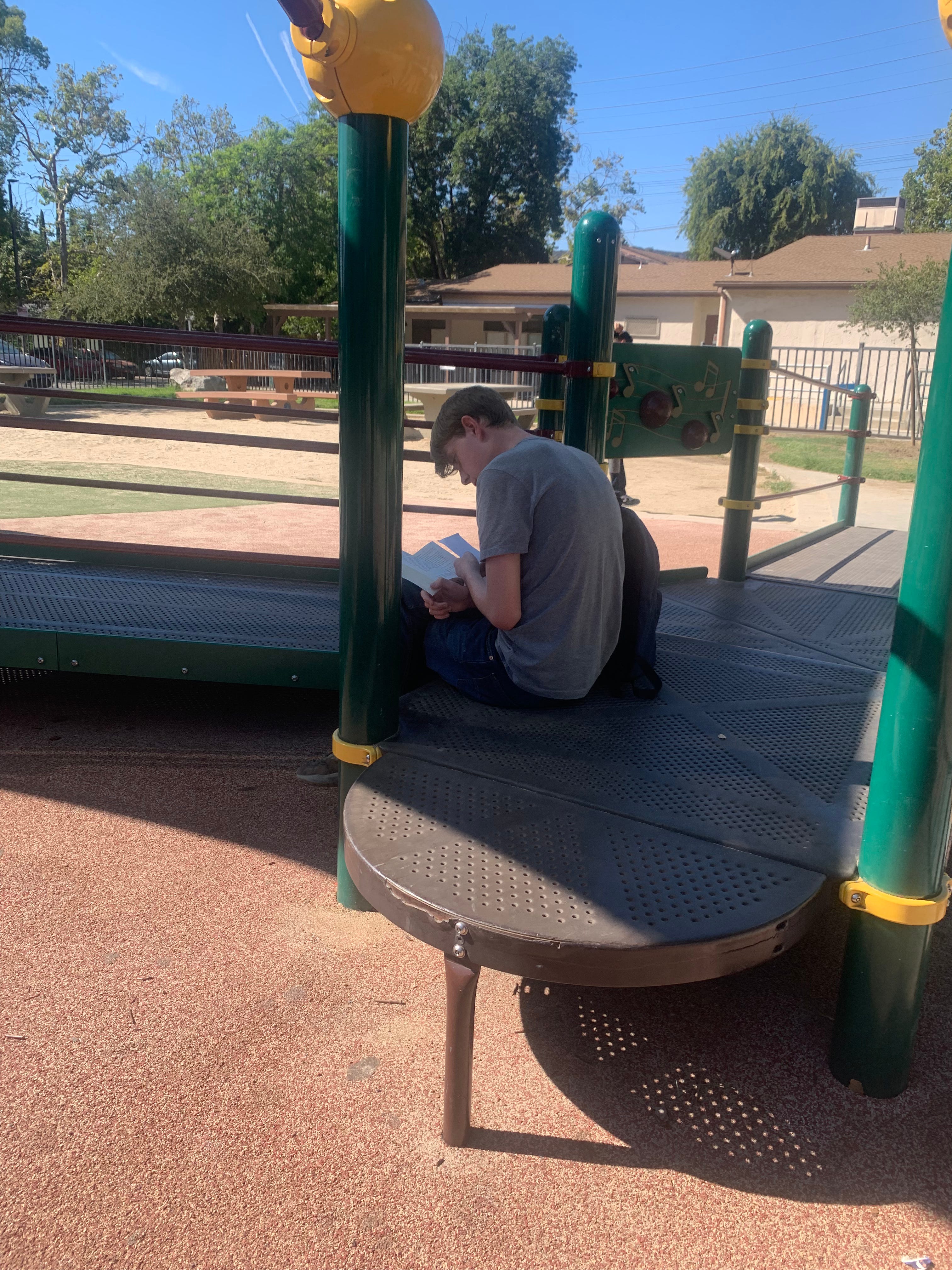
I realize these descriptions paint a rosy picture of my family’s literacy habits. The reality, however, is less than ideal.
My kids, if they’re reading, don’t typically do it of their own volition. It’s not fun to them. It seems like they’d rather do something—anything—else.
We make Ginger and Mickey read at least thirty minutes before bed. It’s a rule, not to mention Ginger’s homework, but it’s also a ritual, a way to be a person.
If they didn’t read then, and if we didn’t make them, would they do it at all? I’m skeptical.
Ginger rarely finishes a book; she only got to the end of Gracefully Grayson because I forced her to. I usually let her abandon books as she sees fit—it’s her reading life, after all!—but there were only thirty pages left and she’d been quite taken by the novel at different points. (I felt vindicated by her final verdict!)
When we read Anne of Green Gables together, she is fidgety.
“Why is this so boring?” she’ll ask. (Meanwhile, I’m filled with the golden light of L.M. Montgomery’s descriptions.)
Mickey, though happy to get in bed to read, resists almost all new books. And if I suggest he read on a random afternoon, he’ll wrinkle his nose.
“I’m not you, Mommy,” he might say, and a hairline crack edges along my heart.

He’s correct. He isn’t me. Neither is Ginger or Bean. That’s fine—I’m not trying to make carbon copies of myself. (Or am I?!) But my kids rarely seem genuinely excited to read, and it bums me out.
It’s worse with Bean, my teenager, to whom I read The Snowy Day so many years ago.
I can’t force him to read at bedtime anymore. So he doesn’t. After Salem’s Lot, he couldn’t get into another book. He abandoned one Stephen King novel after another until giving up on the author altogether. The book of De Gaulle’s war memoirs, which he begged me to get him on a random trip to Vroman’s, also went unread.
The kid doesn’t have a smartphone, but he has other ways to degrade his attention span. There’s the endless buffet of streaming TV, there’s YouTube, there’s Nintendo.
People tell me he’ll get back to the reading habit. That he’s a teenager. And I get that. But when people say that they also didn’t read when they were his age, I’m less comforted. The world our kids are growing up in is different than the one we grew up in. There’s now a mind-boggling array of on-demand entertainment. There is less friction, less boredom, and unlike other pastimes, reading requires an ability to move through those feelings until the mind fully immerses into the text and lights up.
Patience, attention, tenacity—in 2026, you can get through most days without them. Yet those same skills made me a lifelong reader.
What I want is to raise lifelong readers.
But why —and how? Maybe it’s a folly to try.
I’ve written before about family rules v. family values. In a household where reading is a value, what do you do when that value isn’t shared?
When reading is enforced, a site of connection becomes a site of conflict. Believe me, there are more than enough of those in my house.
In the middle of the night, my rational brain floating somewhere in the dark, I worry that my children’s halfhearted reading reflects a widespread, societal deterioration. That their lack of passion for books signals how they’ll live going forward, adapting to an AI-slopped, fragmented world where sustained attention inside another human’s consciousness is considered out of touch, inessential. That reading will only be good-for-you, and reserved for a select few. That it won’t be valued. It won’t even be entertained as entertainment.
Sometimes, way past midnight, I think about all the bored kids who scroll or play mindless games on phones instead of reading—or making art or music or some dumb doodle as their mind wanders. How many artists and thinkers will be unmade before they’re made?
Reading can’t prevent the world’s ills. I know that.
And yet, it’s saved me over and over again.
Reading—and the way my kids do or don’t do it—has become an avatar for everything I’m afraid of. The world they’re inheriting. What they’ll reach for when life gets challenging. The options they will or won’t have. The space they’ll be given: to reflect, imagine, mature, dream.
It’s control I want. I want a failsafe method to keep them safe. And there isn’t one.
Reading to my kids was how I meshed my identities: the person I was before I had children, and the person I became after. They weren’t so different after all.
But raising bigger kids also means accepting them for who they are. Figuring out that dance of identities. Learning to let go, without neglect. Allowing them to differentiate from you. Watching them find their own way, in their world.
It tracks that the children of readers might reject the practice—or at least come to it on their own terms.
The most I can do with my teenager, in particular, is to continue to offer different stuff to read, and to accept his methods. As with everything else, if I push, he resists.
I have to encourage, never demand.
And so—
I check out from the library that dry history book on slavery he asked for, and say nothing as it remains unread on his nightstand.
I buy him a cool-looking graphic novel from a local comic shop, and display zero enthusiasm when he takes it into the bath one evening.
I remain placid when he brings back a sci-fi book from a little free library, and a month later, and I keep my face neutral when he mentions finishing it at school.
I pay attention to his interests so that when he starts talking about being “a simple country lawyer” in an egregious Southern accent (don’t ask), and mentions creating a Civil War-themed amusement park, I can say, “I have just the thing for you.”
All I can do is create opportunities for my kids to read, and model a life that includes books.
To try not to control the outcome—because I can’t, I have no control, I never did.
(Here we are again, learning yet another Motherhood Lesson.)
This is their life to cultivate as they see fit.
The other day, on a Sunday, Mickey wanted to re-read Bird and Squirrel. The sun was hours from setting. It felt like a minor miracle. He wanted to read!
Play it cool.
I asked if I could read my book next to him. He was delighted by the prospect.
It took us a while to get comfortable, and we chatted about how settling in to read can be hard, but once we got going, we were reading for a good forty-five minutes.
He finished his book, for the eleventh time.
Two days later, Bean said offhandedly, “I’m reading that story. The CivilWarLand one.”
I held back from screaming with glee.
“Is it making you laugh?” I asked, trying to sound casual.
“Yeah,” he said.
He offered nothing more. I didn’t press.
I think for those of us for whom a love of reading is part of our identities not seeing it reflected in our kids can be hard. My 7-year-old is still firmly in the golden age of loving to read but I'm trying to brace myself for that to shift (can you really brace yourself for any of it?) That said, my husband is not a big reader and he's...great. He gardens, plays piano, plays drums, builds things, barely looks at the internet most days, and has a rich intellectual and creative outlook on things. And as an English prof I suffer no shortage of people with whom to rave about books, so it's not something I need him to do. I think we think that character flaws inevitably crop up without certain ingredients and that isn't necessarily the case.
Um, this thread is also me. The Very Hungry Catepillar was book #1, still in the hospital lol. They did avidly pick up reading (each in their own ways and preferences) and then it... stopped. At 10 and 13. They will still let us read to them (thank god), but it almost feels like an intentional individuation (I also get the "I'm not YOU, mom"). It is the #1 thing I care about as a parent for all the reasons you mention, and I just have to figure out how to let go and hope that being surrounded by books and three adults (my husband and my mom who lives on property) who are always reading because they love to will land where it should some day.
I will admit, though, that I still buy the WWI graphic novel from 1972 or whatever and just put it in the bedroom, and I am actually offering an allowance bump for the 30 minutes of reading (anything at all, just has to be words on paper) before bed for the 13 year old. I'm not gonna let up on the nudges and incentives, but I do need to let go of the symbolism and weight and fear the whole issue is carrying for me, which you sum up so adeptly here:
"I worry that my children’s halfhearted reading reflects a widespread, societal deterioration. That their lack of passion for books signals how they’ll live going forward, adapting to an AI-slopped, fragmented world where sustained attention inside another human’s consciousness is considered out of touch, inessential. That reading will only be good-for-you, and reserved for a select few. That it won’t be valued. It won’t even be entertained as entertainment.'